

What Is SEO?
A straight-to-the-point guide on what is SEO and where to learn SEO from.
Quick answer:
The SEO-friendly way to name images includes the main keyword you want to rank the image for and using hyphens instead of spaces between words.For example, if you’re naming a picture of a dirt bike, an SEO-friendly name could look something like dirt-bike.png.
Organic image traffic has been a cornerstone of organic growth for years. In the past half a decade, Google has updated SERPs to include more visuals than ever before — often featuring image boxes at the top of the results page.
In 2021 SEOClarity conducted a study that showed more than 55% of all search queries contain images. Since then, this percentage has gone up as the introduction of image boxes and thumbnails has been rolling out to more results pages! Just look at the SERP for the query “image in SERPs”:
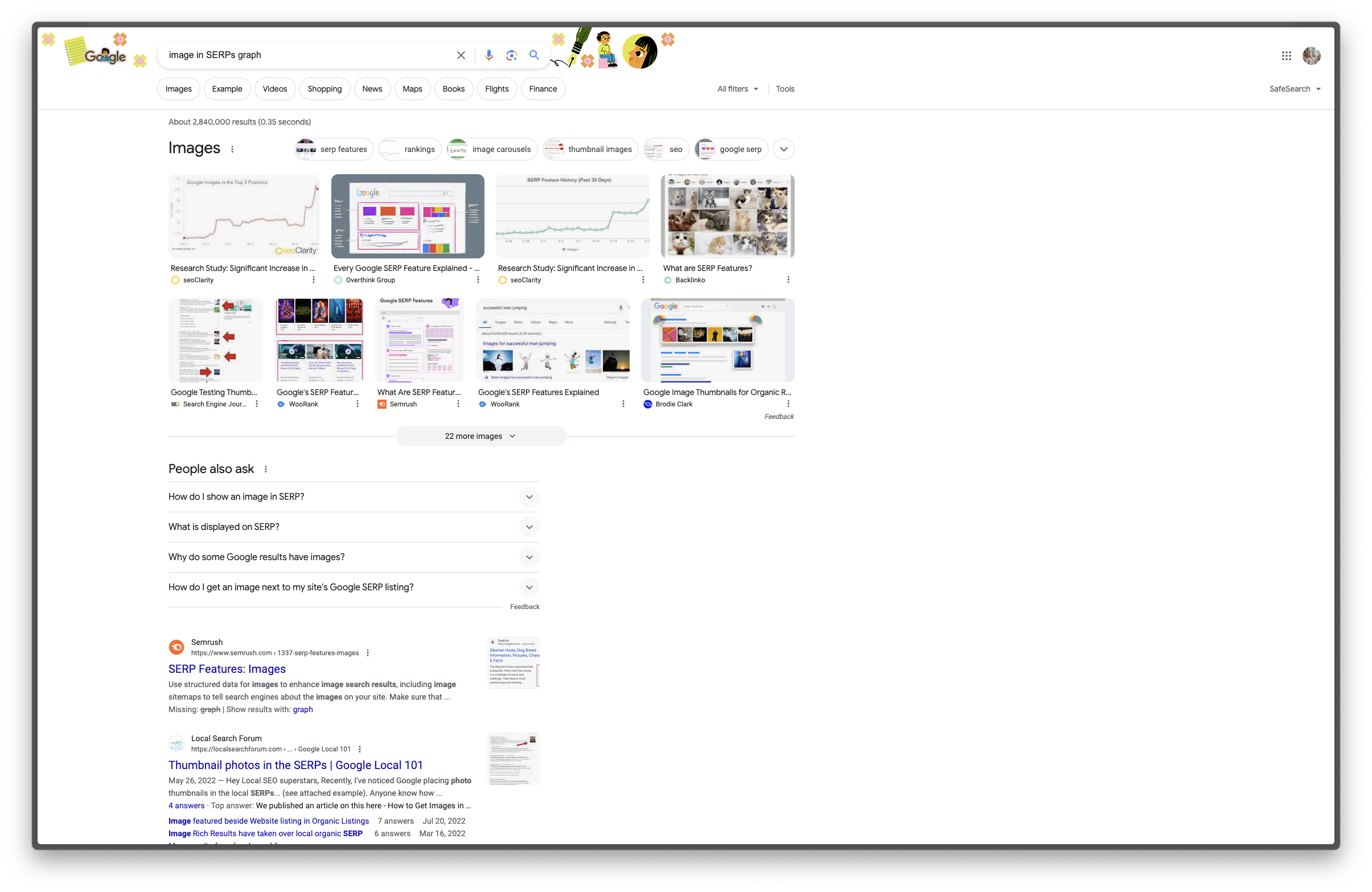
Obviously, images play a big role in search and have the ability to drive a lot of traffic to your website, so what’s the best way to optimize an image file’s name?
Naming images for SEO isn’t hard at all. Even Google suggests using short and to-the-point names for your image files.
Here’s how to choose the perfect name for your image file:
Naming your images is just the tip of the iceberg. Google uses a plethora of ways to ensure they understand image, including OCR (optical character recognition), to ensure the images they show are relevant to the user.
Alt text, short for “alternative text,” serves a dual purpose that makes it a vital component of image SEO. Firstly, it enhances website accessibility for users with visual impairments. Screen readers use this text to describe images to users, ensuring they don’t miss out on any content. Secondly, in scenarios where an image fails to load, the alt text will be displayed, providing users with a description of what they’re missing.
From an SEO perspective, alt text offers search engines a clearer picture (pun intended) of an image’s content. This boosts the image’s chance of ranking in image searches, further amplifying traffic potential. When optimizing alt text:
By treating alt text with the same care and attention as your on-page content, you not only cater to a broader audience but also provide search engines with richer context, reinforcing your website’s SEO strategy.
In the age of fast internet and short attention spans, website loading times are paramount. High-resolution images, while stunning, can significantly bog down your page’s load speed, potentially leading to a higher bounce rate. That’s where image compression comes into play.
Image compression is the process of reducing the file size of an image without sacrificing its quality. It’s akin to shrinking a bag of chips without removing any chips. How does this help? Smaller image files result in faster loading web pages, offering a better user experience and positively influencing SEO rankings, since search engines favor fast-loading sites.
Here’s how to effectively use image compression:
Incorporating effective image compression practices is like ensuring your car is fuel-efficient. It ensures you get the maximum mileage (read: performance) with the least amount of resources, keeping both users and search engines happy.
As we increasingly live in a multi-device world, from smartphones to desktops, tablets to smart TVs, the demand for websites to look and function flawlessly on all these platforms has grown exponentially. Enter the realm of responsive images, a cornerstone of modern web design.
Responsive images automatically adjust and deliver different image sizes based on a user’s device, screen size, and resolution. This ensures that mobile users don’t download unnecessarily large images meant for desktop, while desktop users aren’t stuck with pixelated, upscaled versions of mobile-optimized images. It’s all about delivering the right image for the right context.
Using responsive images is essential because:
To implement responsive images:
In essence, responsive images aren’t just a design nicety; they’re a necessity in today’s diverse device landscape. They ensure your visuals remain sharp, engaging, and effective, no matter where they’re viewed.
Optimizing image filenames for SEO is crucial for enhancing your website’s visibility and driving organic traffic. Here are the main points to remember:
Recommended from restartseo